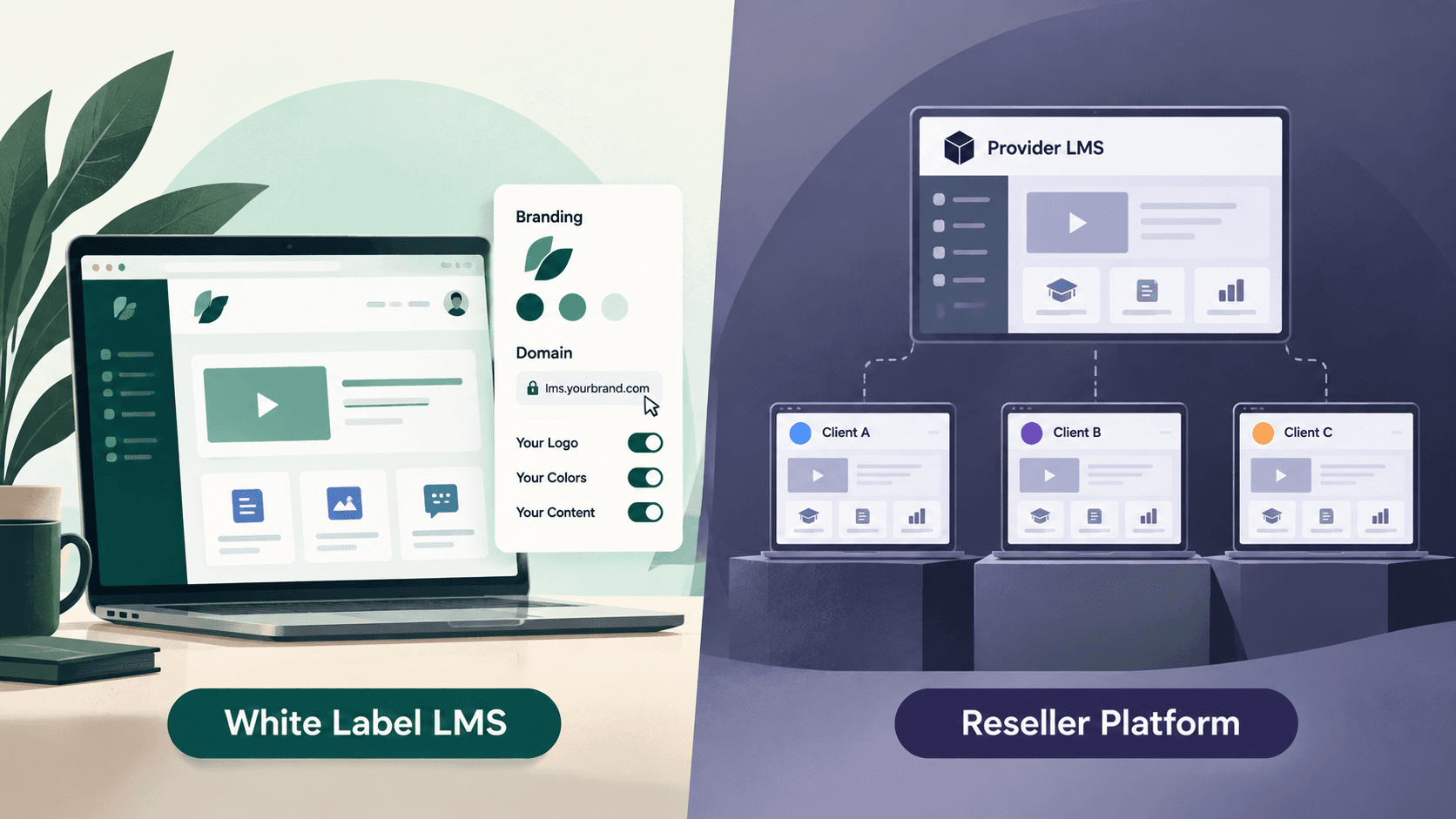
A white label LMS is a learning management system that runs entirely under your own brand — your domain, your logo, your checkout — with no trace of the platform provider anywhere a student can see, unlike a standard course marketplace where the platform's name and branding show up throughout the buying and learning experience.
What white label actually means
On a typical course platform, students see the platform's name during checkout, in the URL, sometimes even in a “Powered by” badge on every page. A white label LMS removes all of that. The domain is yours, the login screen is yours, and the certificates carry your name, not the software vendor's.
How this differs from a reseller or marketplace model
A course marketplace — think a shared platform where multiple creators list courses side by side — puts the marketplace's brand front and center, because the marketplace itself is trying to attract browsing customers. A white label LMS flips that. There's no marketplace to browse and no other creators' courses next to yours, just your own branded academy.
Why this matters beyond aesthetics
Branding isn't just cosmetic here — it affects trust and revenue. When a corporate buyer signs up for training and lands on a page carrying a different company's logo, that's a credibility gap. And on many platforms, white label is really a euphemism for a higher-priced tier. Kajabi's plans currently run $179 to $499 a month depending on how many contacts you have, and Teachable's pricing steps up as you add products and students. Full white label capability, unlimited students, and a flat price without those upgrade triggers is a genuinely different model, not just a feature toggle.
What to check before assuming a platform is truly white label
A few things are worth confirming: does the checkout page show the platform's name anywhere, is there a “Powered by” badge you can't remove, and does white labeling require an upgrade to a specific tier. On Learn 360, white label branding, a custom domain, and unlimited students come included on the $100 a month plan, not as an add-on.